

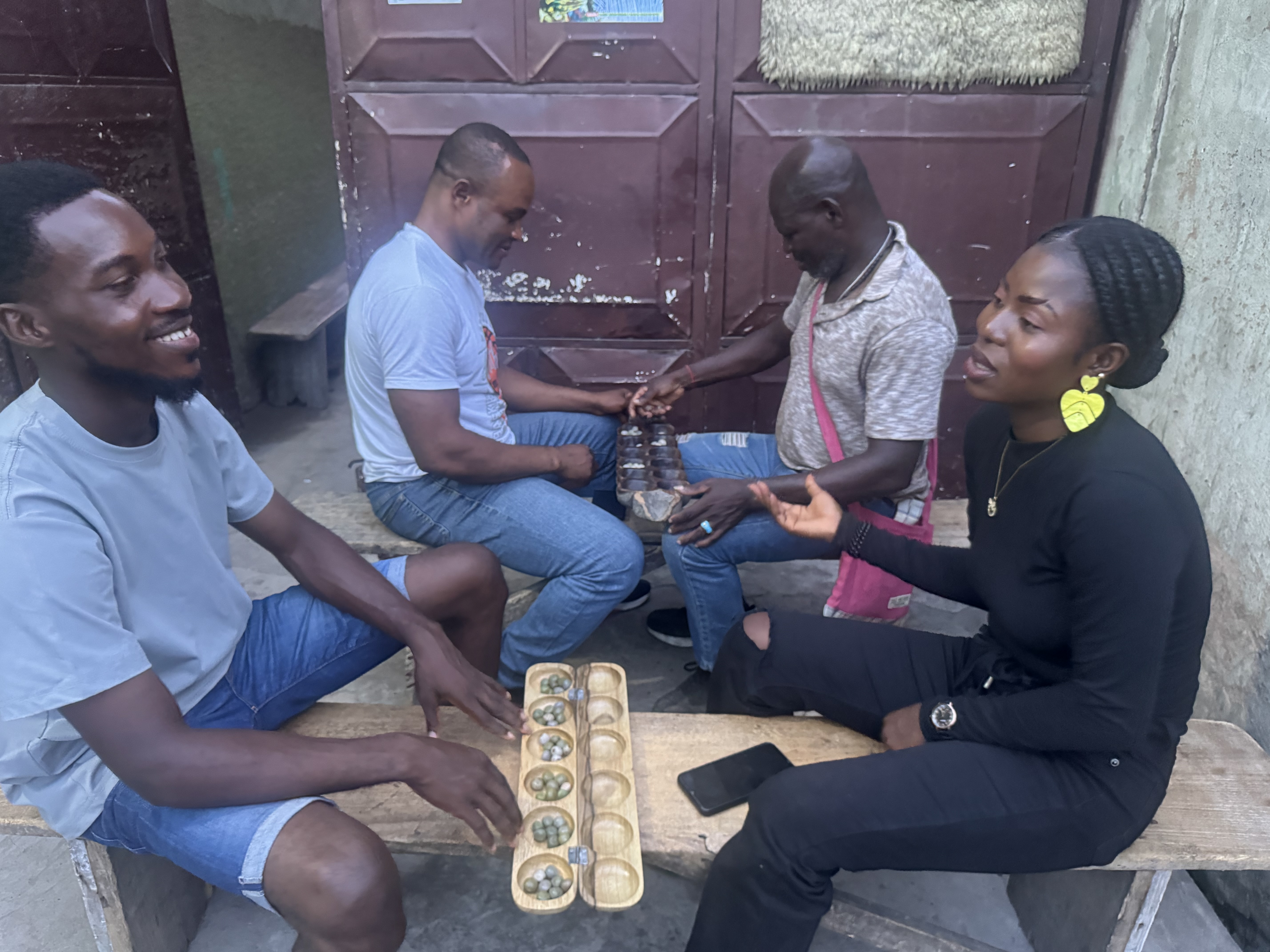
The Asafo companies (warrior groups) in Senya Beraku have a great connection to Oware.
The game mirrors the structure of the Asafo companies (warrior groups):
Tuawo (Vanguard Warriors): lead battles, use hand rattle ("Tua")
Dentiwo (Rear Warriors): follow Tuawo, use handbell ("Denti")
Colors: Tuawo (white), Dentiwo (red)
The Asafo groups protected Senya Beraku's boundaries and fought wars. Oware's seeds represent ancient weapons:
Afaa (Cutlass)
Poti (Club)
Kama (Spear)
Ejiɛyi na Ikwa (Bow and Arrow)
The game plays a role in festivals like Akumase, with Tuawo and Dentiwo taking turns celebrating and protecting the community. Oware has been played by the people of Ghana for centuries if not millennias. Oware is featured in ‘The Golden Oware Counters’ by John Orleans de Graft Hanson published in 1991. The story is set against the historical context of the Asante-Denkyira war, specifically focusing on the Battle of Feyiase. The protagonist, Frimpong, escapes the brutal murder of the king and queen (who were playing with the golden oware counters). It was used as an educational tool, especially to hone the skills of military strategists.
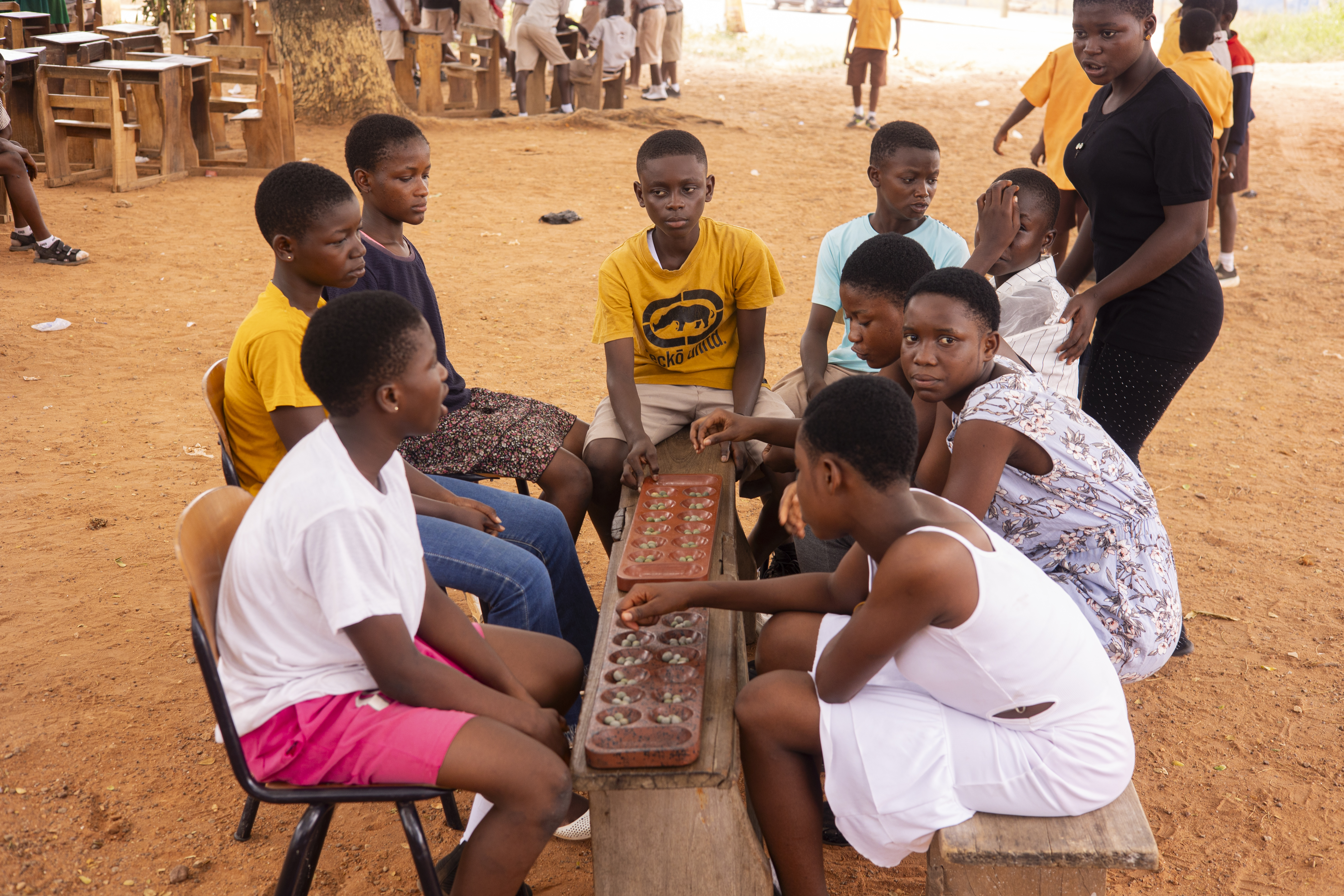
Origin of name in Ghana
The name "Oware" originates from an Akan legend about a couple who fell in love while playing the game and decided to marry so they could keep playing together . In Ghanaian culture, Oware is a social game that encourages participation and discussion, reflecting traditional African values of community and togetherness. Players often get advice from spectators, making it a fun, interactive experience. The game also taught arithmetic to children in the past, showing its practical side. The people of Battor are known for farming and fishing because of the vast land and big lake surrounding them. Their traditional game is Adidada (Oware) Modern Oware tournaments are held globally, with Caribbean, Europe and Africa hosting national and international competitions. The game represents cultural heritage and community.